Neck pain: what it is, when it is serious and how I work
Neck pain is discomfort in the muscles, nerves, bones, joints or discs of the neck. If you contact me about neck pain, you can arrange a visit at my practice in San Pedro de Alcántara or at home. To book, message me on WhatsApp or call.
Clinic in San Pedro de Alcántara, by appointment only · Home visits in San Pedro, Marbella, Benahavís and, with prior notice, Estepona
Comprehensive Body Assessment €70 at the clinic · €120 at home
Phone +34 672 29 91 22
In short
- Neck pain (cervical pain) is often linked to posture, sleep or muscle strain.
- Most episodes last a few weeks.
- Keep your neck moving gently; use a collar only if your doctor advises it.
- Tingling or weakness in an arm, or a lump in your neck, needs a doctor’s attention.
- Some signs need immediate attention: when to call 112.
What is neck pain?
Neck pain is discomfort in one or more structures of the neck: muscles, nerves, vertebrae, joints or discs.
It is also called cervicalgia. The vertebrae are the bones of the spine, with discs between them. The name tells you where it hurts; your doctor makes the diagnosis.
What it can feel like
Your neck may feel stiff, making it difficult to turn your head. Discomfort can also reach the shoulder. When a nerve is compressed, there may be tingling, numbness or weakness in the arm or hand.
Posture and everyday activities
Muscle tension and strain are common causes. Spending a long time at a desk without changing position is one example. Others include reading or watching television in an awkward position, or working with a screen that is too high or low.
Sleeping position matters too: holding your neck awkwardly during sleep can leave it uncomfortable when you wake. Turning suddenly during exercise or lifting something quickly with poor posture can also cause pain.
Other causes include changes in the neck joints and problems with the discs. Less commonly, there may be a fracture or an infection in the spine. Your doctor determines the cause.
A neck that suddenly becomes stiff and twisted has a separate page: stiff neck and torticollis. You can also read about whiplash after an accident or fall and headaches. For seated work, there are pages on working at a desk and the desk setup checklist.
Is neck pain serious?
Most neck pain lasts only a few weeks. How the pain began and what other signs accompany it determine the attention it needs.
When it is an emergency
Fever and a headache alongside a very stiff neck can indicate a serious infection. If your neck is so stiff that you cannot bring your chin to your chest, with those other signs, seek immediate attention.
A heart emergency can also cause pain in the neck, jaw or arm. Shortness of breath, sweating, nausea or vomiting are signs that should not simply be put down to your posture.
Being unable to move an arm or hand after a blow or fall is another reason to seek emergency help. Ask someone to call 112. Do not wait for an appointment with me to have these situations assessed.
When to make an appointment with your doctor
Tingling, loss of feeling or strength, and a cold arm need medical advice. So do a lump, trouble walking or pain that interrupts your sleep.
Speak to your doctor if there is no improvement after a week of care at home. Do the same if your usual painkillers do not help, or if you are worried.
When to see a doctor or call 112
Call 112 or go to the emergency department (urgencias) in any of these situations:
- Fever and a headache, with a neck so stiff that you cannot bring your chin to your chest.
- Signs of a heart emergency, such as breathlessness, sweating, nausea, vomiting, or pain in your arm or jaw.
- Neck pain after a fall, blow or injury, if you cannot move your arm or hand: ask someone to call 112.
If you lose bladder or bowel control, seek medical attention as soon as possible.
Contact a doctor if any of these occur:
- Neck pain after a fall, blow or injury, even if you can move your arm and hand.
- Numbness, tingling or weakness in an arm or hand, or an arm that feels cold.
- Difficulty swallowing or breathing alongside the pain.
- Difficulty walking or keeping your balance.
- Swollen glands or a lump in your neck.
- Pain that gets worse when you lie down, wakes you at night, or is so severe you cannot get comfortable.
- Symptoms that remain after a week of self-care.
- The painkillers you take regularly do not help.
Osteopathy does not replace your doctor or any medication you have been prescribed.
What I do in a session and what your doctor decides
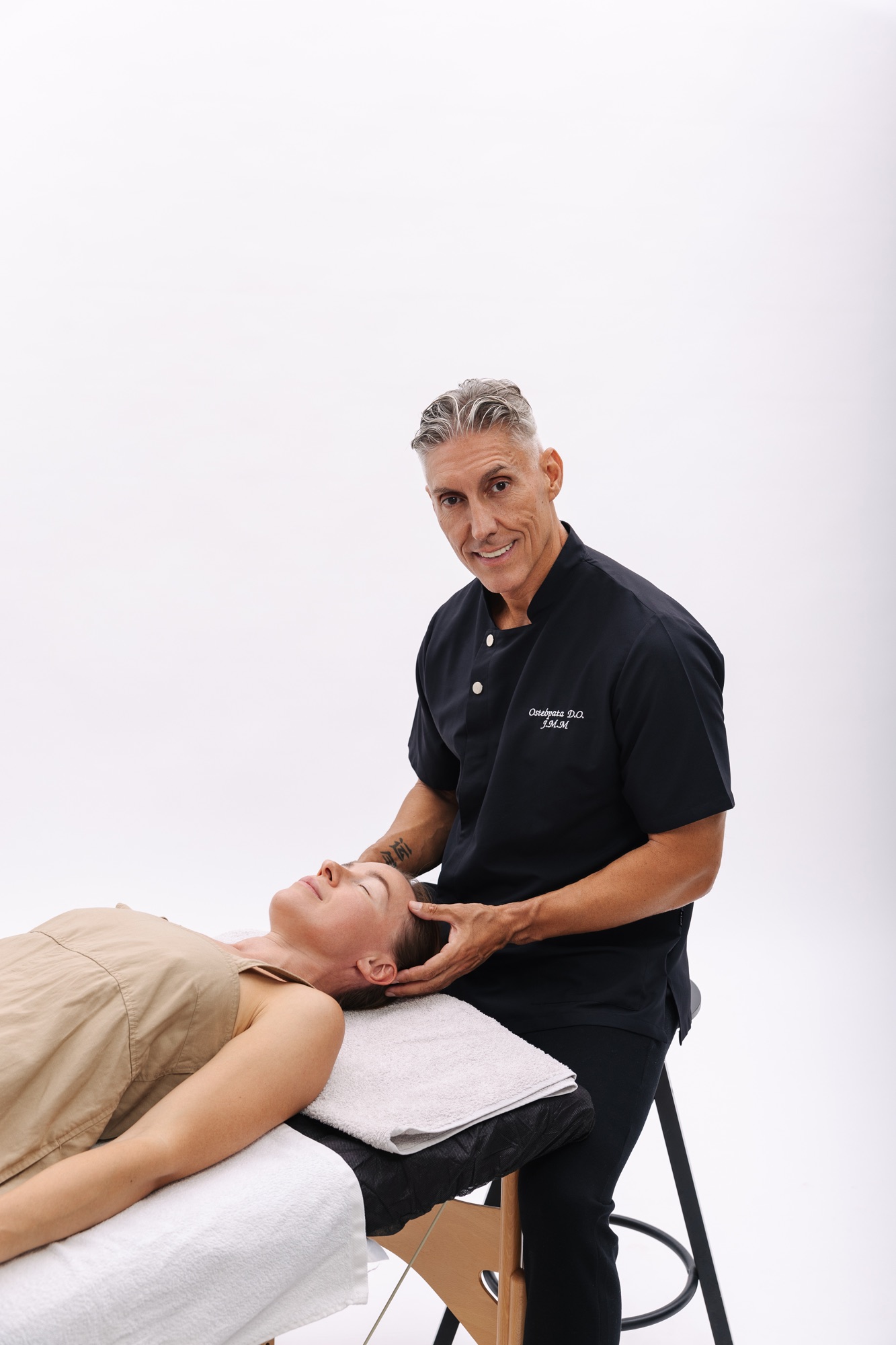
When someone contacts me about neck pain, I observe their posture and movements, without limiting that observation to the area they point to.
I offer deep hands-on sessions. I give and explain personalised posture advice and exercises for home. We practise them together so you can ask me anything you need.
I do not promise results.
Medical decisions belong to your doctor
Diagnosis, ordering tests and prescribing or changing medication are your doctor’s responsibility. I won’t interfere with your doctor’s decision. I may suggest that you see your doctor in case tests are needed.
If I have any doubts, or cannot work in your case, I recommend seeing your doctor.
In Spain, osteopathy is not listed in Ley 44/2003, the law regulating the health professions.
You can read my general explanation of how I work in osteopathy.
Staying active with neck pain
As general information, gentle movement within a comfortable range is advisable. You may need to cut back on demanding activity during the first few days. You can still move your neck without forcing it; reducing activity does not mean keeping it completely still.
Activity and getting around
Use a neck collar only if your doctor advises it. Wearing one for a long time can weaken the neck muscles. If you cannot turn your head properly, avoid driving or cycling: those activities may be dangerous with that restriction.
Sleeping and sitting
The general advice is to use a low, firm pillow that supports your neck, with a firm mattress. Your head should be level with your body. Avoid sleeping on your front or twisting your neck in bed.
At your desk, avoid staying in the same position for long periods. Sit upright, gently rolling your shoulders back and drawing your neck back. A screen that is too high or too low can also play a part. You can review your workspace using the desk setup checklist.
Heat or cold packs are used as care at home. Do not fall asleep with a hot or cold pack in place.
Neck exercises: general information and four examples
These four common, gentle movements are described and drawn for this page. They are general information, not a programme chosen for your situation or a prescription from me. What suits you depends on your circumstances. If you are unsure, ask your doctor or another healthcare professional.
Before you start: read the signs that need medical attention. Move slowly, through a small range and only as far as feels comfortable. Do not bounce or force a position.
Stop if pain increases, or if tingling, numbness or weakness appears or spreads in an arm or hand. Also stop if you feel unwell. If you have doubts because of a health problem, recent surgery, an injury or an accident, ask your doctor first.
All examples are seated on a stable chair, with your feet flat and your back upright. In the drawings, grey marks the start and the dark line marks the end.
Chin tuck
Side view: the head slides backwards while the eyes stay level. Start: sit upright with your head slightly forwards, as if looking at a screen. End: slide your head straight back, drawing your chin in without tipping it down, until your ears are over your shoulders. Then relax.
Head turn
Front view: the head turns while the shoulders stay still. Start: look straight ahead with your shoulders relaxed and down. End: slowly turn to one side as far as comfortable, keeping your chin level and shoulders still. Return to the centre, then turn to the other side.
Ear towards shoulder
Front view: the ear moves towards the shoulder, which stays down. Start: keep your head upright and look straight ahead. End: tilt your head sideways without raising your shoulder, turning your face or pulling with your hand. Return to the centre and change sides.
Shoulder roll back
Side view: the shoulders follow an arc backwards and down. Start: let your shoulders sit slightly rounded forwards. End: gently roll them up, back and down, leaving your chest open and your neck long. Then relax.
If you come with neck pain: your first visit
You choose where we meet
When you message me on WhatsApp or call, give me your town and say whether you prefer my practice or a home visit. We agree a day and time.
I start by listening to you
You tell me about your situation and I observe you. The Comprehensive Body Assessment includes that case history, a full check and first contact.
I consider the whole body
I see your body as a single, indivisible unit when assessing your case and beginning the hands-on work. There is no single action on an isolated area.
Any doubt goes to your doctor
If something is outside my competence, I cannot work in your case or I have doubts, I recommend seeing your doctor.
Doctor or osteopath first?
If you have any of the warning signs above, medical attention comes first. For cases of doubt, this is my answer:
“If in doubt, or if it is serious, it is best to see the doctor first and then the osteopath; if you decide to come to the osteopath first, I can also advise you on what to do first. I need to look into it and assess after the case history.”
If you have had an operation or have reports from your doctor
Bring any reports or test results you have from your doctor or a specialist to the visit. It’s fine if you don’t have any.
Your doctor has the final say. We start once your doctor has discharged you, following all their instructions and safety requirements.
Prices
Clinic, home visits and prices
You’ll find my clinic in Fuente Nueva, at C/ Ilusión 17, San Pedro de Alcántara. Visits are by appointment only. Free parking on an unpaved site is available 50 m away.
- First visit: Comprehensive Body Assessment. €70 in the clinic (60 min); €120 when I visit you at home.
- Osteopathy session at the clinic: €70 per session.
- Home session: from €100. There’s no extra cost for travel up to Estepona. You’ll find terms and cancellation details through the price list link below.
- Russian or Ukrainian translator: To arrange one, request her with 5 hours’ notice. This costs you an extra €60 per session. For an urgent visit, the translator can come subject to availability.
I make home visits to houses, hotels and villas. I cover San Pedro, Marbella (including Nueva Andalucía and Puerto Banús) and Benahavís. Visits to Estepona need prior notice.
I accept Bizum, cash and bank transfers. I don’t work with insurers. The prices page lists my visit rates.
For medical emergencies, call 112.
Neck pain: frequently asked questions
Can the height of my screen make a difference?
Yes. A screen that is too high or too low can cause neck discomfort. Check your monitor’s position and avoid staying in one posture for long periods. There is a desk setup checklist you can use.
Which pillow is best if my neck hurts?
The general advice is a low, firm pillow that supports your neck and keeps your head level with your body. The mattress should also be firm. If you are unsure what suits your circumstances, ask your doctor.
Should I wear a neck collar?
Only if your doctor advises it. Wearing one for a long time can weaken the neck muscles. In general, keeping your neck moving gently is preferable to holding it still.
Is it the same as torticollis?
The names are not interchangeable. Neck pain describes discomfort in that area; for a neck that suddenly becomes stiff and twisted, read the page on stiff neck and torticollis. Your doctor makes the diagnosis.
How long does neck pain last?
Most episodes last a few weeks. If it does not improve after a week of care at home, consult your doctor.
Is cervicalgia the same as neck pain?
Yes. Cervicalgia is the medical name for neck pain. It describes where it hurts; the diagnosis is your doctor’s.
Sources
- MedlinePlus, “Neck pain” (Spanish edition), reviewed 14 January 2026; accessed 9 November 2026. Used for: definition, structures, everyday and other causes, arm symptoms, warning signs, seeking advice after a week and care at home.
- NHS, “Neck pain”, reviewed 27 April 2023; next review due: 27 April 2026; accessed 9 November 2026. Used for: usual duration, common causes, a cold arm, reasons to consult, movement, collars, driving, sleep and sitting posture.
- NHS, “Flexibility exercises”, reviewed 20 November 2023; accessed 9 November 2026. Used for: general safety guidance (start gently, build up slowly).
Tell me what kind of visit you need and where
Phone +34 672 29 91 22
To arrange a visit, tell me your town and whether you prefer the clinic or a home visit. Don’t send diagnoses, reports or medical test results by message.
Clinic in San Pedro de Alcántara, by appointment only; home visits in San Pedro, Marbella, Benahavís and, with prior notice, Estepona. Monday to Sunday, 8:00 AM–8:00 PM.
I do the sessions in Spanish or English.